


SMSF Property Valuation: What the ATO Requires and How to Stay Compliant
Self-managed super fund (SMSF) holds property, getting the valuation right is not optional. The ATO is specific about what it expects, and an SMSF audit is not the time to discover your valuation does not meet the standard. This guide explains what is required, when valuations are needed, and what your auditor needs to see.
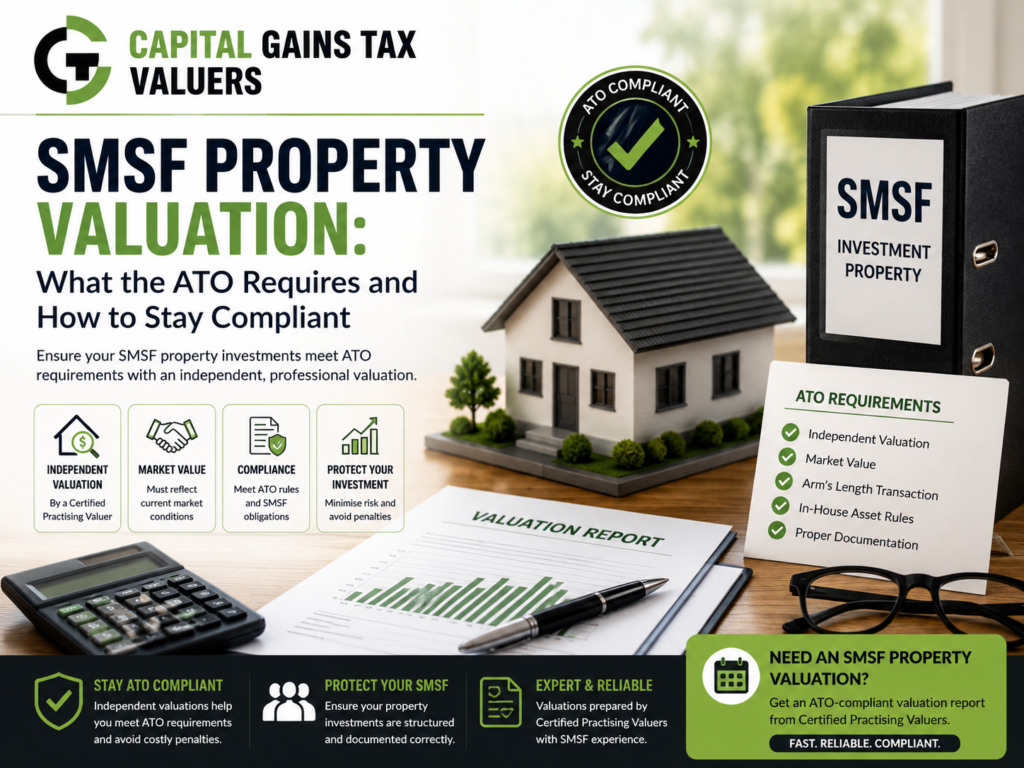
Why the ATO Requires Property Valuations Inside an SMSF
An SMSF is required to prepare financial statements at the end of each financial year. Those statements must reflect all assets at their current market value. For property held inside the fund, that means obtaining an objective, evidence-based assessment of what the property is worth at 30 June each year.
The reason the ATO cares so much about this comes down to fund integrity. SMSF assets determine member balances, tax calculations, contribution caps, and pension valuations. If property is overstated or understated, everything downstream is affected. The ATO and the Australian Prudential Regulation Authority both scrutinise this closely.
The Three Year Rule and What It Actually Means
There is a common misconception that SMSF properties only need to be valued every three years. This is not quite accurate and it catches trustees off guard regularly.
The ATO guidance is that a property held in an SMSF should be valued at market value each year for the purpose of preparing the fund’s financial statements. What the three year reference relates to is that an independent, formal valuation by a qualified professional is recommended at least every three years. In the years between formal valuations, trustees may use other objective and supportable evidence, such as recent comparable sales or a real estate agent’s written assessment.
However, if there has been a significant change in the property’s condition or market circumstances, a fresh independent valuation is required regardless of the three year cycle. Trustees who rely on a stale valuation in a rapidly changing market expose the fund to challenge during an audit.
Real Scenario : Linda and her husband held a residential investment property inside their SMSF. Their SMSF auditor flagged during the annual audit that no independent valuation had been completed in four years. During that time, the local market had moved significantly. The auditor was unable to sign off on the financial statements without a current, independent assessment of market value. Linda contacted a certified valuer, received a report within five business days, and the audit was resolved. The lesson was straightforward: staying ahead of the valuation requirement costs far less than resolving an audit qualification.
Related Party Transfers and Why They Attract Extra ATO Scrutiny
One of the most sensitive areas in SMSF compliance involves acquiring assets from related parties. If your SMSF is purchasing a commercial property from a business you own, or a residential property from a family member, the transaction must occur at market value. The ATO’s position is firm on this.
An independent valuation at the date of transfer is not just recommended in these cases, it is effectively mandatory. The report needs to demonstrate that the price paid reflects what an arm’s length buyer would pay in the open market. Without this, the ATO may treat the acquisition as a non-arm’s length income arrangement, which carries significant tax consequences.
In-specie contributions of property into an SMSF follow the same principle. The value of the contribution must be established by an independent valuer at the time of transfer.
ATO Reference : Under SIS Regulation 8.02B, SMSF trustees are required to value fund assets at market value for the purpose of preparing financial statements. The ATO’s Valuation Guidelines state that valuations should be based on objective and supportable data, and that qualified independent valuers should be engaged where there is doubt about the reliability of trustee-prepared estimates. For related party transactions, an independent valuation is expected as a matter of course.
What Your SMSF Auditor Needs to See
Your auditor’s job is to assess whether the fund’s financial statements are accurate and whether the trustee has complied with the SMSF rules. When it comes to property, they are looking for evidence that the valuation is current, credible, and prepared on an objective basis.
A report from a Certified Practising Valuer that clearly states the valuation date, the methodology used, the comparable sales relied upon, and the concluded market value gives your auditor everything needed. Auditors are much more comfortable with a formal valuation report than with an informal agent letter, particularly for properties with higher values or where the market has been volatile.
If you are managing your own SMSF and preparing annual accounts, the cleanest approach is to have an independent valuation on file for the current financial year. It removes ambiguity, satisfies the auditor, and protects the fund.
Commercial Property Inside an SMSF
Many SMSFs hold commercial property, often a business premises that the fund leases back to a related business. This arrangement is permitted under the SMSF rules, but it comes with strict obligations.
The lease must be at a commercial market rent, and that rent must be reviewed regularly against current market conditions. An independent valuation of both the property and the market rent is essential to demonstrate arm’s length dealing. The ATO pays close attention to related party leasing arrangements during audits, and trustees who cannot produce independent evidence of market rent and market value are vulnerable.
Conclusion
SMSF property valuations are not a bureaucratic formality. They are central to the integrity of your fund’s financial records, your auditor’s sign-off, and the ATO’s confidence that the fund is being managed appropriately. Getting an independent, certified valuation at the right time is far simpler than managing the consequences of not having one.
Is your SMSF property due for a valuation? We provide ATO-compliant reports accepted by auditors across Australia. Request a quote at capitalgainstaxvaluers.com.au