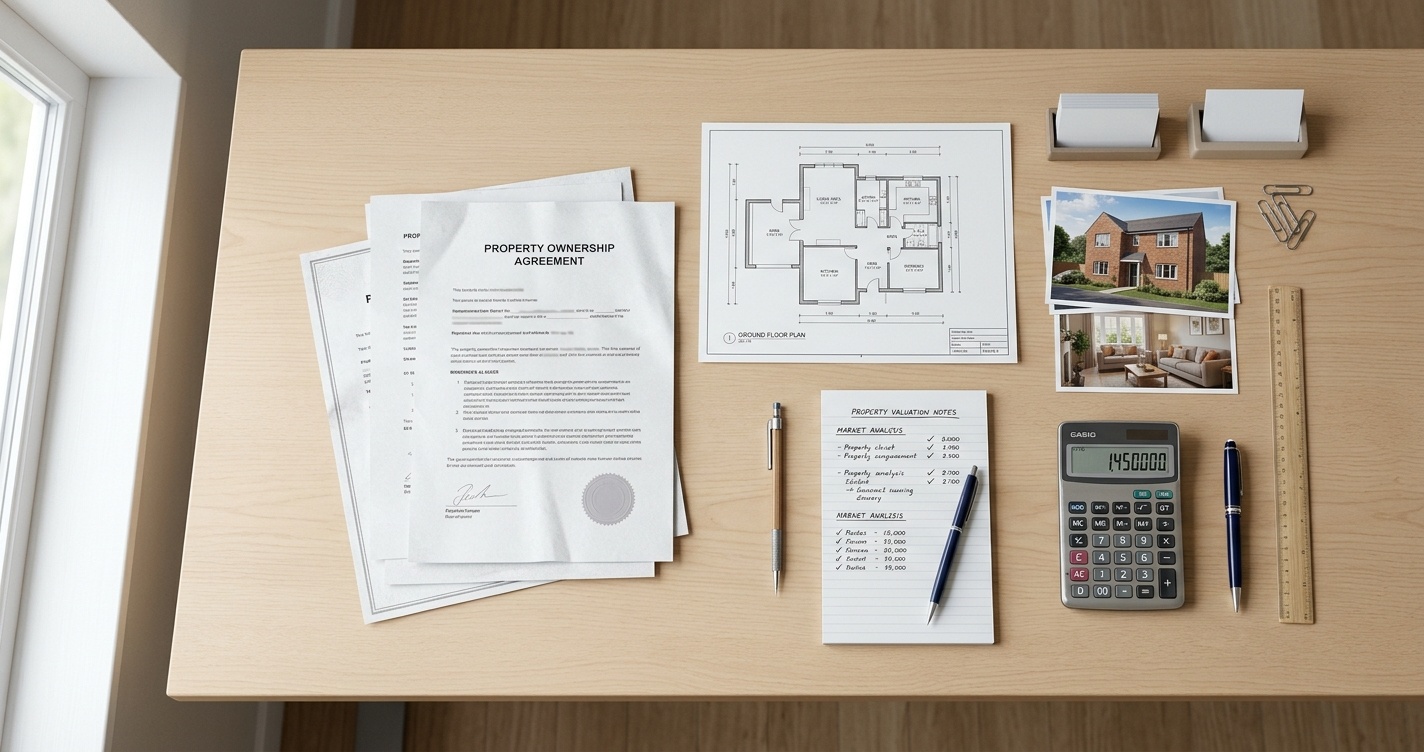



Family Law Property Valuations: How They Help You Decide Whether to Buy Out, Sell or Keep
When a relationship ends, the property is usually the biggest question on the table. One of you might want to stay in the house, the other might need their share of the equity to move on, and neither of you is sure what the place is actually worth.
Most people start with a rough figure from a real estate agent or a quick look at realestate.com.au. That’s fine for a first conversation, but a professional valuation for property settlement provides a stronger basis when significant property equity is involved. There’s also a tax side that catches many people out: who pays capital gains tax (CGT), when, and whether a transfer between you triggers it at all.
This article explains how valuations work in a property settlement, how they feed into the choice between a buyout, a sale or keeping the property, and where CGT fits in.
Summary
- A property settlement starts with working out what’s in the pool and what it’s worth. A reliable valuation gives both sides, and their lawyers, a figure to negotiate from.
- Property is generally valued at its current market value (around the time of settlement or hearing), not what you paid or what it was worth at separation.
- Buyout: the valuation sets the amount one person pays the other. A small difference in value can move the buyout figure by tens of thousands of dollars.
- Sale: the valuation sets a realistic reserve and helps you plan for selling costs and CGT.
- Keep (co-ownership): the valuation sets the starting equity split, which matters even if you don’t sell for years.
- CGT rollover relief may apply when property is transferred under a court order or formal agreement. It doesn’t apply to informal arrangements. The person who keeps the property takes on the original cost base and any tax that’s built up in it.
- Retrospective valuations (value at a past date) can matter, for example when a home became a rental.
- Always get legal and tax advice alongside the valuation. This article is general information only.
What Are Family Law Property Valuations?
Family law property valuations are independent opinions of what a property is worth, prepared for use in a property settlement after separation. They’re typically written by a qualified, certified practising valuer who inspects the property, analyses comparable sales and explains how they reached their figure.
They’re used in negotiation between the parties and their lawyers, in mediation, and as evidence if the matter goes to the Federal Circuit and Family Court of Australia. If the valuer is instructed as an expert witness for an actual or anticipated proceeding, their duty to the court prevails over their obligation to the person instructing or paying them.
Valuation vs agent appraisal
An agent’s appraisal is a free opinion on what a property might sell for. It’s useful for a ballpark, but an agent is also hoping to win the listing, and an appraisal isn’t a formal valuation. A valuation is a written report with a stated basis, method, inspection details and comparable sales.
Many couples use agent appraisals early on and then agree to a formal valuation once the numbers start to matter. Bank valuations are a third thing again. They’re ordered by the lender, for the lender, and generally can’t be shared as your evidence.
Which date is the property valued at?
In general, assets are valued at or near the date of settlement or hearing, not at the date of separation. If the market has moved a lot since you split, that matters. Some valuations, though, need a past date as well, and we’ll get to those below.
Time limits also apply. Married couples generally have 12 months from the date a divorce takes effect to start property proceedings, and de facto couples generally have two years from separation. A lawyer can tell you how those apply to you.
Buyout, Sale or Keep: What Each Option Means for Valuation
Here’s how the valuation figure feeds each pathway.
| Buyout | Sale | Keep (co-ownership) | |
| What the valuation does | Sets the equity, and so the payment, one person makes to the other | Sets a realistic expectation of price and net proceeds | Sets each person’s starting share of the equity |
| Main tax question | Is the transfer covered by CGT rollover? | CGT on sale (unless the main residence exemption applies) | Who is treated as owner for CGT and main residence purposes as time passes |
| Watch out for | Refinancing: the lender will want its own valuation | Selling costs and timing | Needing a clear exit plan |
Buyout
In a buyout, one person keeps the property and pays the other for their share, usually by refinancing or by offsetting against other assets such as super.
Here’s a simple hypothetical. A house in a Sydney suburb is valued at $1,400,000, with a $500,000 mortgage, so the equity is $900,000. If that equity ended up split 50/50, the buyout would be $450,000. But if a second valuation came in at $1,450,000, the equity jumps to $950,000 and the buyout moves to $475,000. A $50,000 difference in the valuation shifts the payment by $25,000 under an even split. That’s why couples often agree on a single, independent valuer instead of trading competing opinions.
Two practical points:
- The lender has its own view. If you’re refinancing to pay out your ex-partner, the bank will value the property independently. Large gaps between the two figures can derail a buyout, so it’s worth knowing where the bank is likely to land.
- Selling costs. The person keeping the property avoids agent commission, marketing and the stress of a sale. Some settlements factor that into the buyout figure, others don’t. It’s a matter for your lawyer.
Sale
If neither of you can afford to keep the property, or you’d rather make a clean break, selling is simple in principle. The valuation still earns its keep: it gives you a realistic idea of net proceeds after the mortgage, agent fees and legal costs, and it helps you decide on a price range if you and your ex-partner disagree on listing strategy.
A sale also triggers CGT if the property isn’t fully exempt, which we’ll cover below.
Keep (co-ownership)
Sometimes neither person can buy the other out right now. Some couples agree to hold the property together until the kids finish school or the market improves, then sell and split the proceeds.
This is where an upfront valuation is easy to overlook. Without an agreed starting value, there’s no clear baseline for dividing equity later, especially if one person has been paying the mortgage or funding renovations in the meantime. A formal agreement, drawn up by a family lawyer, should say how the proceeds will be split and what happens if one person wants out earlier.
Capital Gains Tax and Family Law Property Valuations
CGT is the part most people don’t see coming. Selling or transferring an investment property, or a home that wasn’t your main residence for the whole time you owned it, can create a capital gain. The gain is basically the difference between what you receive (or are treated as receiving) and your cost base, which is roughly what you paid plus certain buying, selling and improvement costs.
The relationship breakdown rollover
If you transfer property to your former partner as part of a separation, you may qualify for a CGT rollover. The rollover is automatic where it applies, meaning you can’t choose whether it applies, and the transferring person disregards the capital gain or loss. The person who receives the property then wears the tax later.
The key condition is how the transfer happens. The rollover only applies where the transfer follows a court order or another qualifying formal agreement. It doesn’t apply to private or informal arrangements. If you shake hands and sign a transfer without the right paperwork behind it, the person transferring the property could face a CGT bill. Your lawyer needs to be involved before anyone signs a transfer form.
What the person who keeps the property inherits
When you later sell a property you received under the rollover, CGT is calculated as though you’ve owned it since your former partner acquired it. You inherit the original cost base and the original acquisition date, not a fresh start at the date of settlement.
That matters a lot when you’re deciding whether to keep. Take two investment properties with the same market value: one bought in 2008 and one bought last year. They’re worth the same on paper, but the first one carries a much larger built-in capital gain. Whether and how a court or negotiating parties account for that latent tax liability depends on the circumstances, particularly whether a sale is likely. That’s a conversation for your lawyer and accountant, and a reliable valuation is where it starts.
For properties bought before 20 September 1985, there’s generally no CGT at all, which can change the maths for older family properties considerably.
The main residence exemption
The family home is usually exempt from CGT while it’s your main residence. When a home is transferred under the rollover, you may still be eligible for a full or partial main residence exemption when you eventually sell, depending on how the home was used over the combined period of ownership. If it was partly rented out, or one of you moved out and treated another home as your main residence, the exemption can be partial.
When You Might Need a Retrospective Valuation
Sometimes the question isn’t what the property is worth now, but what it was worth then. A retrospective valuation estimates market value at a past date. Common situations in a separation include:
- Date of cohabitation or marriage. If one person owned a property before the relationship, its value at that point can feed into how contributions are assessed.
- The date a home started producing income. If a main residence later became a rental, the cost base for CGT can be reset to its market value at the date it first earned income, in some circumstances. Without records from that time, a retrospective valuation fills the gap.
- Missing records. If the original contract, renovation invoices or settlement statements are lost, a valuer can help establish a defensible figure.
Retrospective valuations rely on sales evidence from the time and on a clear description of what the property was like at that date, so photos, plans and old listings help.
Stamp Duty and Other Costs
Stamp duty (transfer duty) rules differ between states and territories. Most have concessions or exemptions for transfers between former partners under family law orders or agreements, but the conditions vary, and a transfer made informally can be treated differently. Check with your state or territory revenue office or your lawyer before settling. Also allow for legal fees, conveyancing, loan discharge and refinancing costs when you compare your options.
How to Choose the Right Option
There’s no single right answer, but these questions help:
- Can the person keeping the property afford it? Check borrowing capacity before you finalise the figure, not after.
- What’s the CGT position? Ask your accountant to model both keeping and selling.
- How reliable is the valuation? If you and your ex-partner disagree on the figure, consider agreeing on a single independent valuer.
- What are the non-financial factors? Kids’ schooling, work location and emotional ties matter too, and they’re a good reason not to rush.
- Have you got formal documents in place? Consent orders or a binding financial agreement affect both CGT rollover eligibility and stamp duty treatment.
Frequently Asked Questions
Do I need a formal valuation or is an agent appraisal enough?
For early conversations, an appraisal is often enough. For a buyout, a contested settlement or anything heading to court, a formal valuation from a qualified valuer is the safer choice. It carries more weight and sets out how the figure was reached.
Can my ex-partner and I use the same valuer?
Yes, and many couples do. Jointly instructing one independent valuer can save money and reduce arguments. Your lawyers can set out the terms of the instruction.
Do I pay CGT if I transfer my share of the house to my ex-partner?
Not necessarily. If the transfer is made under a court order or qualifying formal agreement, the rollover can apply and you’d disregard the gain at that point. An informal transfer without that paperwork may not qualify. Get tax and legal advice first.
Will the bank accept our valuation for a buyout?
Usually not. Lenders order their own valuations. A separate independent valuation is still useful for negotiating the buyout figure, and it may help you anticipate where the bank will land.
Is the property valued at the date we separated?
Generally it’s valued at or near the date of settlement or hearing. Some situations call for past-date valuations as well, such as the date of cohabitation, or a change of use for CGT purposes.
What if we can’t agree on a value?
Options include mediation, jointly instructing a valuer, or getting separate valuations and negotiating from there. Your lawyer can advise on which approach suits your situation.
Does valuer registration matter?
Registration and licensing requirements for valuers differ across states and territories. It’s worth confirming that your valuer is suitably qualified and, where applicable, registered, and that they have experience with family law and tax matters.
Conclusion
Whether you buy out, sell or keep, the decision rests on a reliable number and an understanding of the tax that comes with it. Family law property valuations give both sides a fair starting point, and the capital gains tax rules decide what that number is worth after the transfer.
Get the valuation right first, then compare your options with your lawyer and accountant.
Need a Valuation for Your Property Settlement?
If you need an independent valuation as part of a separation, including a retrospective valuation or one that supports your CGT position, Capital Gains Tax Valuation can help. We work alongside family lawyers and accountants, and you’re welcome to call for a no-obligation chat about what you need. Call +61 438 080 786.